

NFTs IN TRADITIONAL ARTISTRY
- Lweendo Kalonga

- Feb 18, 2023
- 5 min read
Updated: Feb 19, 2023

Written by Lweendo Kalonga
The concept of NFTs goes as far back as 2014 when Kevin McCoy minted the first of its kind. He created what he called Quantum on Namecoin which is a form of cryptocurrency branched from bitcoin software. However, it along with others created in that era did not gain much popularity or recognition. Speaking of NFTs or non-fungible tokens, these are defined as digital assets based on blockchain technology that may be in the form of a picture, a piece of art, music or the more common drawings. In more modern times, an NFT can be regarded as ownership like a deed to many things, from digital art to virtual real estate. Like a photographer’s unique logo on the pictures they take, each NFT contains unique identification codes that distinguish them from each other.
..............But not many people know this. The idea of NFTs became more noticeable when celebrities and wealthy people began buying illustrations of a primate with an emotionless facial expression almost always. These come in different styles, mimicking different colour patterns, backgrounds and even clothing. This was the rise of what became known as Bored Ape which is said to be a collection of over 1000 of these NFTs, many of them having varying values of upwards of 90 million dollars.
However, not every NFT is meant to be a quick cash grab but carries meaning and beauty and emotion that gives it value. Many may not have a high price tag, but others form from the creativity of young and artistic minds. One such creative hails from our motherland Zambia.
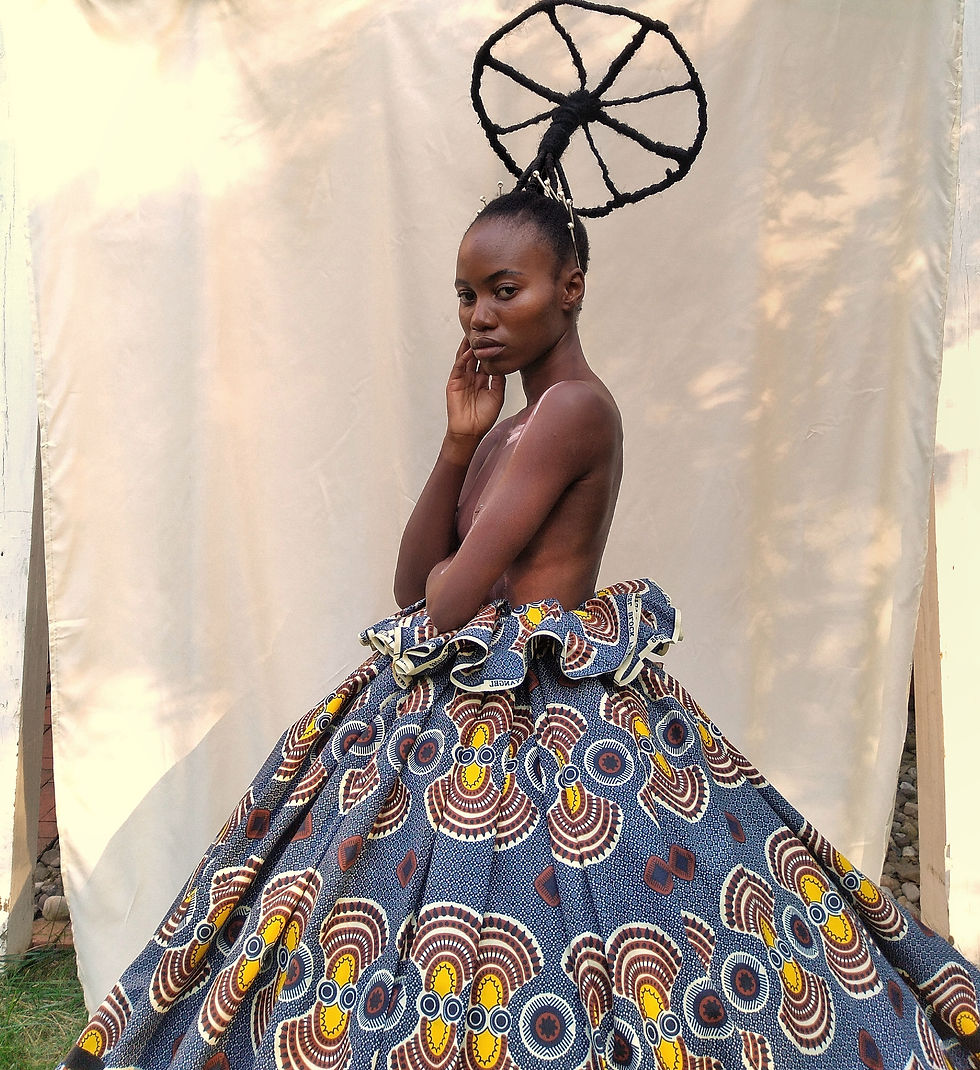
Lukundo Lula Musonda is a contemporary multidisciplinary artist living in the United States. She is a talented model, photographer, fashion designer who is interested in the rich African History, Anthropology and Social/Political culture. Her brand, called Utuntu, is made up of an
amazing clothing line designed with comfort and elegant style centred around the use of crochet.
Lula describes herself as a visual artist exploring her Zambian identity. She has spent her time exploring a multitude of creative ventures such as the use of different traditional art mediums, working as an Art Director and her fascination with history and cultures around the world. Her talents have led her to the opportunity of working with the Vogue programme which is known as PhotoVogue.
Names carry meaning in many tradition-centred countries of the world. An example of one such a country is Zambia where over 50 languages are spoken. When asked
about her unique name and if it ties to her project, she explained that “Lukundo comes from the phrase ‘Lukundo lwa kwa lesa’ which means ‘God’s love’. So, this project is an introspection of Zambian ethnic identity and a love letter to my country from me. Nothing in life is a coincidence”.
The interview
What cultural issues does the project address?
The project cross-references what I know about my culture today with pre-colonial artefacts and historical information. It is a mind map that explores the matrix of ethnic identities. Although it is an editorial self-portraiture project, it is also an archival/visual historic research piece that has allowed me to use myself as a canvas and muse to reflect on my own identity as a Zambian. For a long time, I did not understand what it was to be a Zambian or to belong to an ethnic group. I think most people do not understand that, or they understand it in a “face value only” way. Asking ourselves; Who are
we? Whom have we become? Whom are we becoming? This project can also address the issue of our existential crisis as Africans at the moment, at least us Zambians. Hopefully, it can harvest the curiosity oneself as a Zambian, about where we come from, our ancient African civilizations, kingdoms, economies and societies. I think looking back can help us figure out the matrix of our ethnic identities.
How do you receive criticism from people who may say that your work is far from the behaviour of a traditional woman? In relation to modern-day society.
Inside my head, I laugh.
Outside my head, I respect their opinion. I usually follow up criticism- positive or negative, with the question “why?” I like to know what people are thinking so I can know how my work will be received-not to change the delivery, but to brace because I am human. Artists share their work from the soul, you put all your five senses, blood, sweat and tears into your work, only to give it up to the community at the end of it all. Once you give it up, that’s it. It is no longer in your control or safe in your care. It now belongs to the community, the audience. I as an artist am moved to do things by a spiritual feeling inside me. As long as I fulfil that feeling, I can sleep at night with people’s criticisms.
What is the intention behind your work being thought-provoking?
I want the community, the audience, to ask my work “why?” I want this because I think art and its place in the community have always been a spiritual introspection, especially for Africans. There is benevolent communication between the artistic expression and the viewer. Each person is on their journey in life and when they get to the crossroads at which they engage with art, they need to be asked a question, either about self or about society. The beauty of meeting art at that intimate crossroads is that nobody but you can truly understand the way that you have been moved in your heart or mind.
With TO ZAMBIA, FROM LOVE, I hope that people can see themselves and dare to draw a mind map of their own identity before our minds and bodies were colonized and enslaved.
How do you overcome creative blocks?
When I have nothing or what the proverbial “They” calls “creative block”, I plan and wait for the season to pass. But I have come to realize that true creative blocks, at least in my experience, came from the aftereffects of doing something that is not sincere as well as forcing something that is not sincere-
it’s Yahweh's way of saying “why you lying? Ubufi, leka!
I understand the importance of seasons, you can’t be reaping a harvest through and through. I haven’t had a true “creative block” in about 4 years. There was a time when I had to learn the mediums of expression, but I don’t see this as a creative block, I simply did not have anything to say yet. I have a lot to say as an artist now.
We look forward to seeing her work and any plans for future projects. We hope that credit is given where it is due, especially for Lukundo. Do take the time to check out more images from her project below.
The hunter

The innovator

The medium

The noble
Connect with Lula here;
Connect with Lweendo here;
References


Comments